Full Description
View Full Description
Play like a voice, not a keyboard
Flux is designed to bring the phrasing of classical instruments into a synthesizer format. The right-hand bow tracks pitch on the X-axis, so you can glide, add vibrato, and shape intonation by ear. Volume is controlled by your distance to the centre line on the Z-axis, which makes crescendos and decays feel natural.
The note scale is stable and clearly marked, helping you learn the layout and land notes cleanly. When you want a more defined result, you can engage quantisation, with an adjustment that leaves room for controlled vibrato rather than snapping everything rigidly to pitch.
Magnetic bows give deep control without touch
Instead of antennas and capacitive coupling, Flux uses magnets and a multipolar sensor array. Two bows are held between your fingers, and the system reads both position and angle. That angle tracking is a big deal: flipping the right-hand bow on the Y-axis switches octaves, while left and right tilting on the X-axis controls two independent modulation parameters that vary by engine.
On the timbre side, six poles can register positive and negative magnetic fields independently. Flip the left bow and you can switch what those sensors control, opening up extensive parameter access while your hands stay in the air.
Engines that behave like complete instruments
Flux is built around synthesis algorithms intended to feel like self-contained instruments, each set up for direct timbral control. The system is DSP-based and includes spatial effects, so you can shape tone and space from the synth itself. Sound design options include tools such as distortion, complex FM, and physical modelling aimed at creating unreal, non-existent instrument behaviours.
Engines live together in one firmware, and you can launch a different engine quickly without rebuilding your whole setup. Presets store the complete state, including the chosen engine and tunings, so a performance can move between contrasting sounds with minimal interruption.
Performance modes and setup tools that keep it reliable
Flux supports monophonic, duophonic, and polyphonic playing, plus staccato-enabling and percussive-style options for sharper attacks. Duophonic mode lets you play two voices with two bows, each with its own volume control and independent octave flips, which helps with wide intervals.
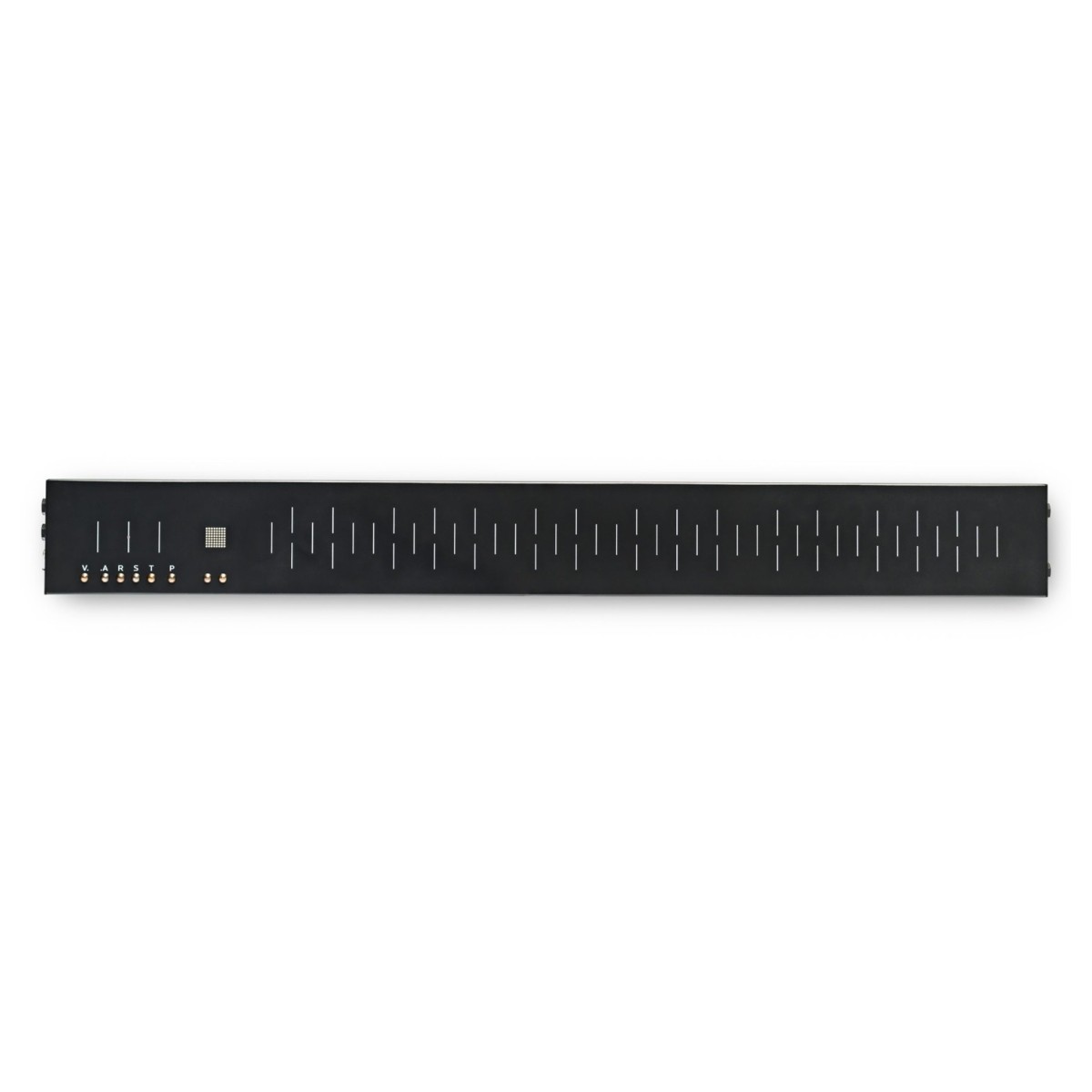
To keep tracking consistent in real spaces, Flux includes automatic calibrations at power-on and during pauses, along with a fast manual calibration using touch sensors. A simple sensor-based control scheme avoids deep menus: touch a sensor to pick a parameter, then use the notes area like a large slider to set its value.
Features
- Expressive synthesizer combining classical instrument expressiveness with modern synthesis capabilities
- Touchless magnetic interface inspired by the Theremin, offering high-precision control without physical contact
- Uses dual magnetic bows tracked by multipolar magnetic sensors to manipulate pitch, volume, modulation, and timbre
- Right-hand bow controls pitch, volume, octave shifts, and modulation via spatial position and tilt
- Left-hand bow accesses up to twelve independent timbre parameters through flipping and movement
- Enables control of sixteen parameters simultaneously, all without touching the surface
- Supports continuous pitch with optional quantization and adjustable vibrato sensitivity
- Polyphonic, duophonic, and monophonic modes for varied performance styles
- Advanced synthesis engines with FM, distortion, and physical modeling, all accessible from a single firmware
- Rapid engine switching and preset recall including engine type and tuning settings
- DSP-based synthesis with in-house Hi-End DACs and analog circuitry for high audio quality
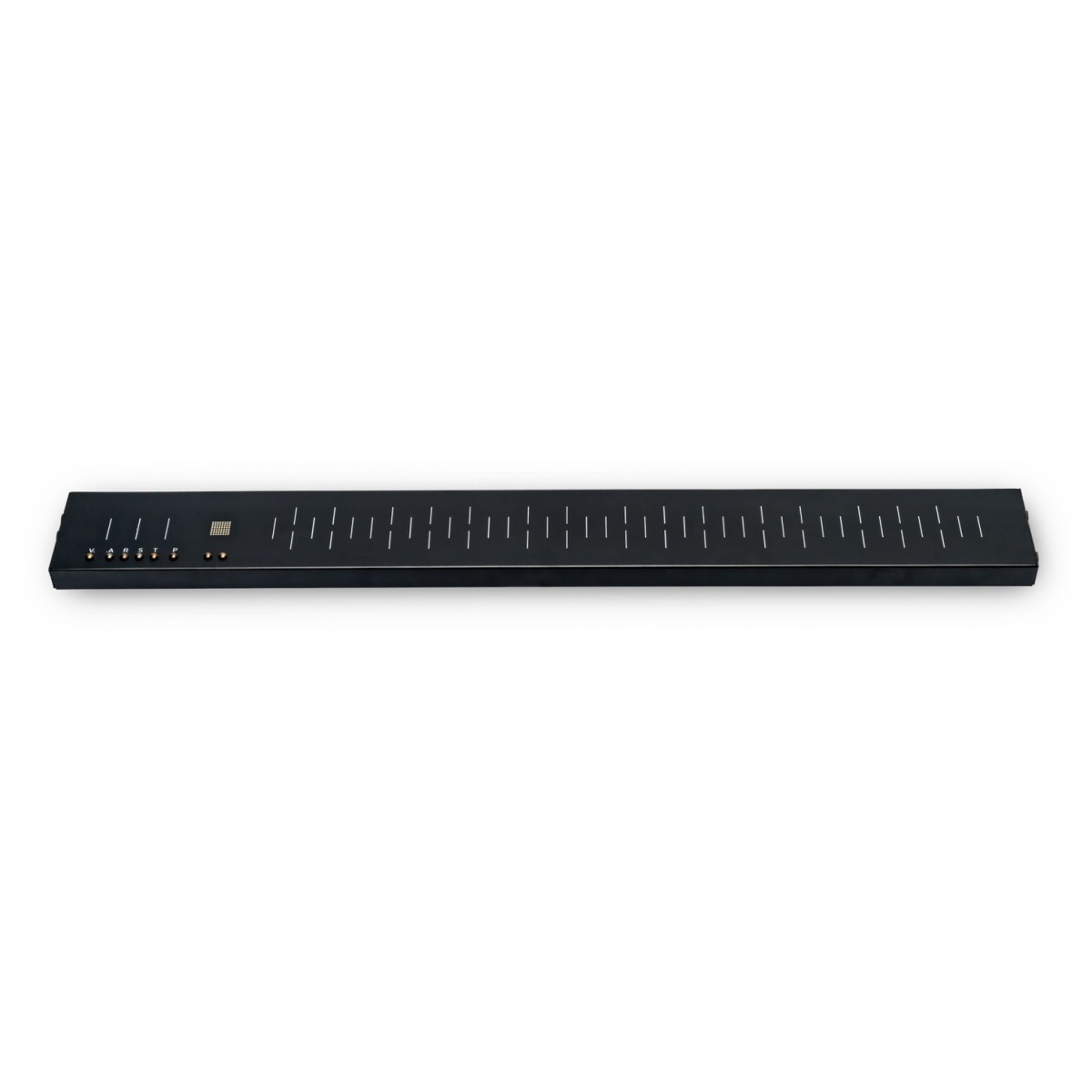
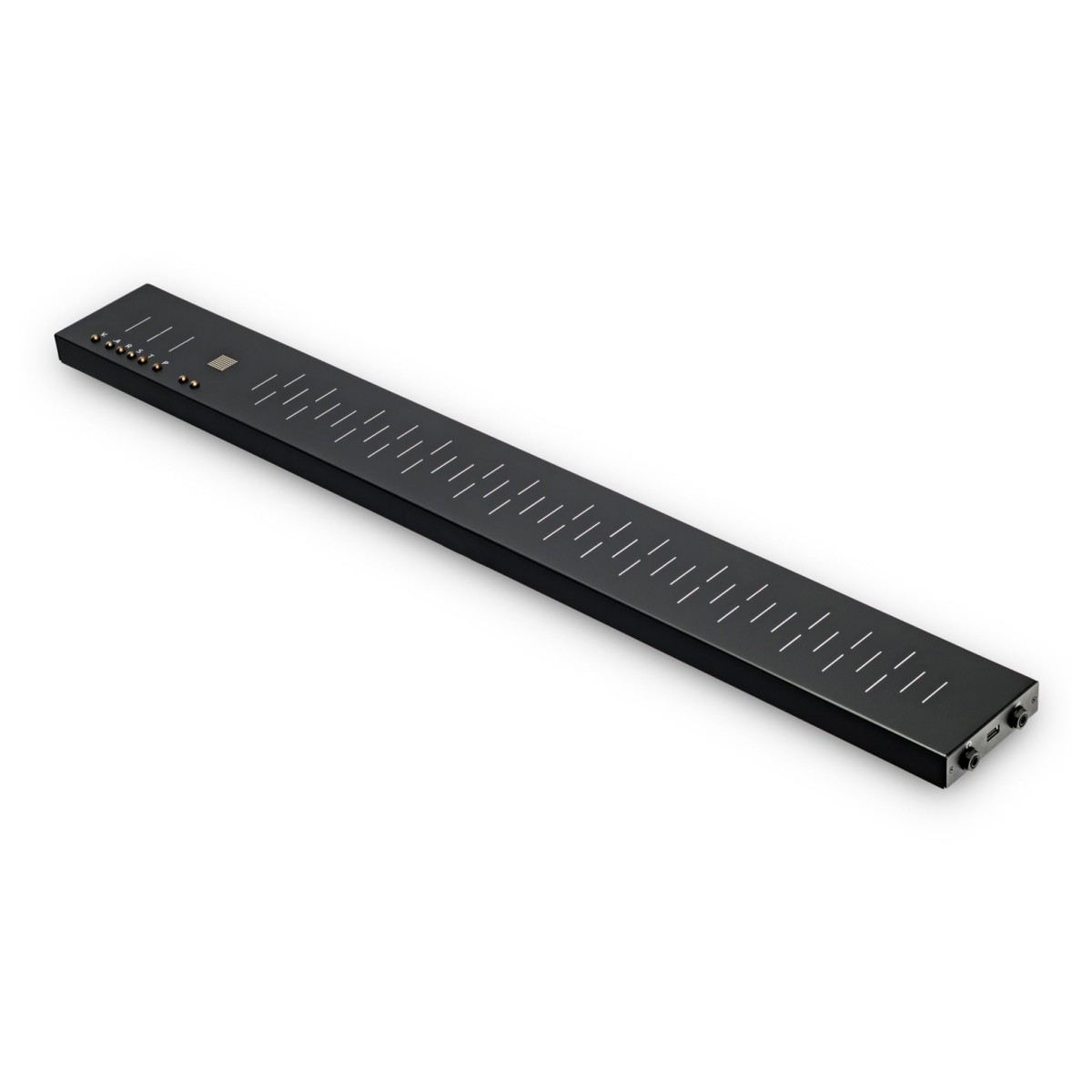
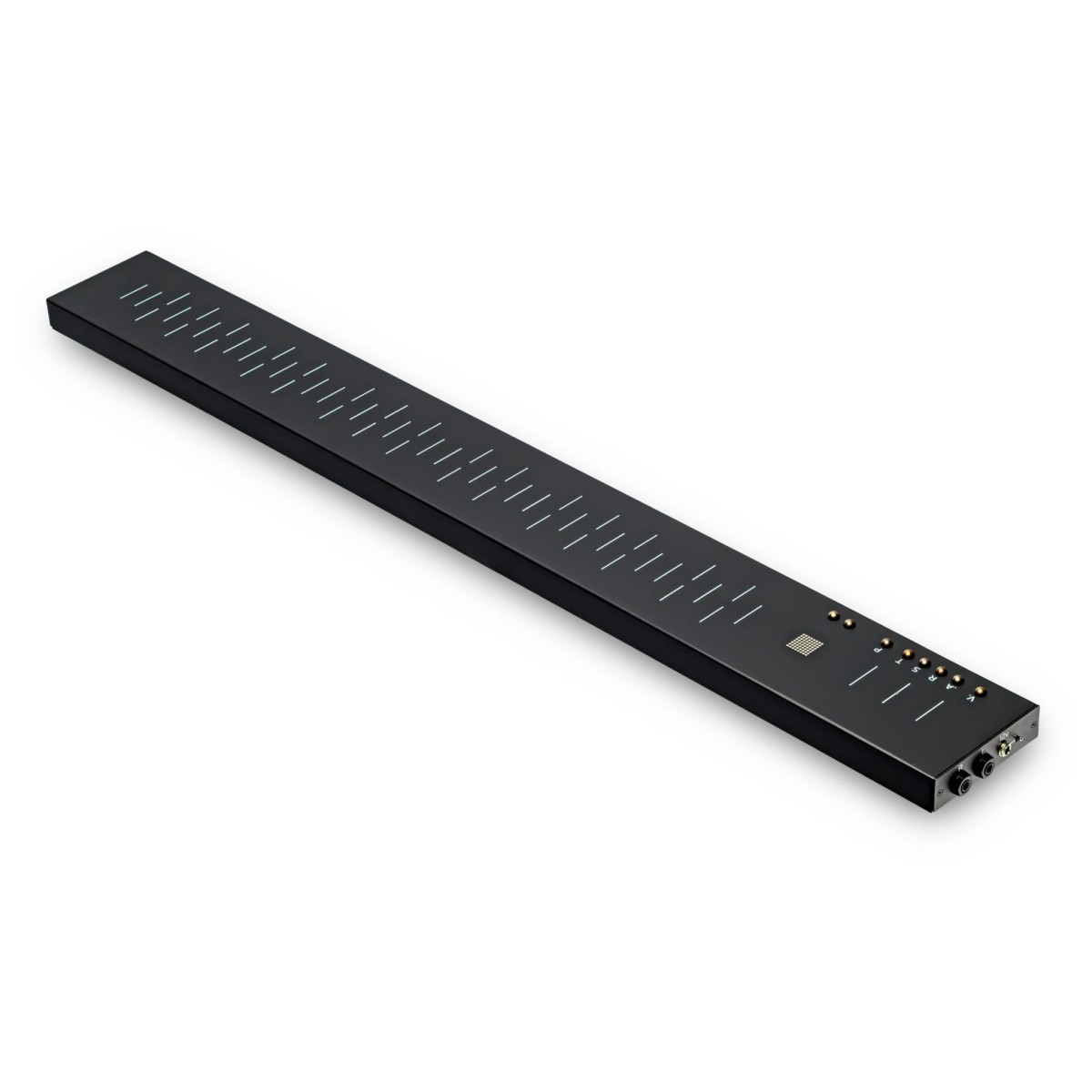
- Piano-style marked magnetic keyboard with 37-note range and clear note indicators
- Keyboard response adjustable for sensitivity and expressive nuance in both pitch and timbre zones
- Built-in reverb and delay effects with real-time control over volume and decay
- Flip and tilt gestures expand performance dynamics, including real-time octave changes and modulations
- Manual and automatic calibration systems to ensure precision in varying environmental conditions
- Single-motion control of all parameters using touch sensors and bow positioning
- Separate controls for analog volume and DSP output to balance sound quality and clipping
- Preset system with 37 slots, each storing full instrument state (except master tuning)
- Duophonic mode enables simultaneous control of two independent pitches with dynamic expression
- Percussive mode allows sharp, velocity-sensitive triggering similar to plucked or struck instruments
- Pedal input allows real-time timbre holding or switching between staccato and legato playing
- Sensor lock function prevents accidental parameter changes during live performance
- Master tuning adjustable in fine increments, global across all presets and engines
- Left-handed mode flips both pitch and timbre zones for ergonomic accessibility
Specifications
- Notes Keyboard: 37 notes
- Musical Range: 9 octaves
- Maximum Number of Synthesis Algorithms: 37
- Polyphony: 1–12 (depending on the algorithm)
- Number of Presets: 37
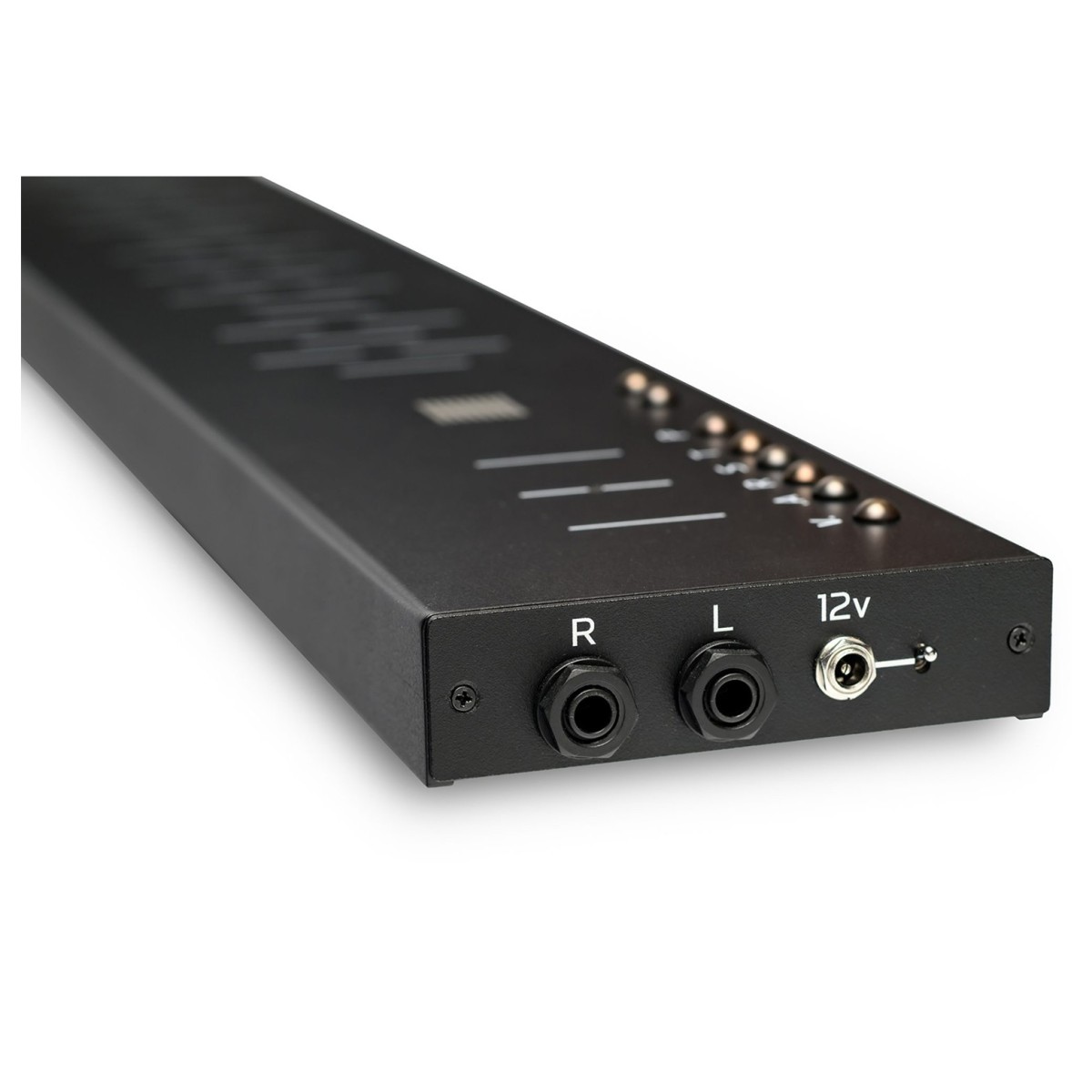
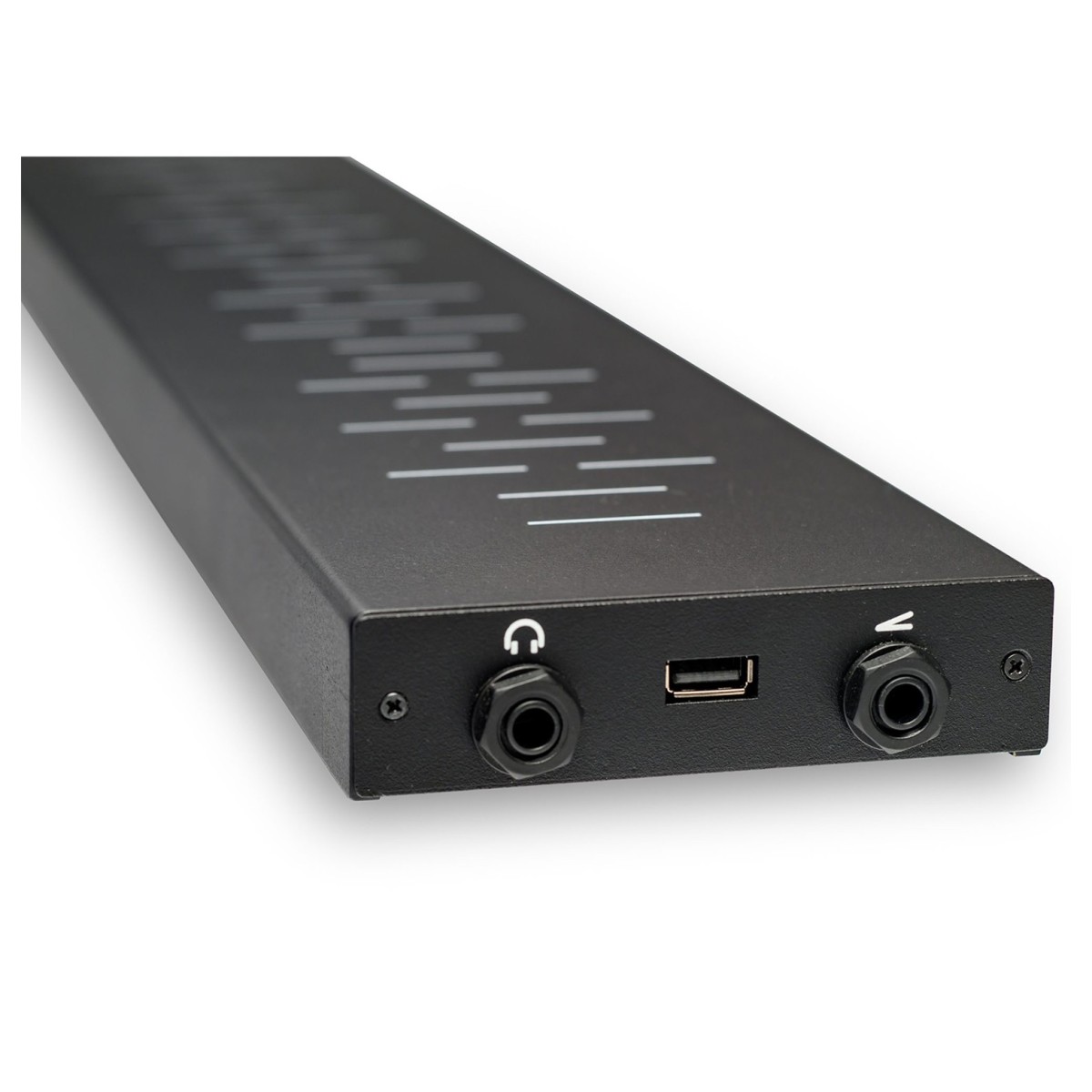
- Line Output: L, R TS / TRS 1/4 inch jacks
- Maximum Line Output Signal: 18 V Peak-to-peak
- Nominal Line Output Signal: 5 V (Volume 100 )
- Headphones Output: TRS 1/4 inch jack
- Headphones Resistance: 6–64 Ohm
- Power Supply Voltage: DC 12 V *
- Power Consumption: 0.4 A
- DC Jack: 2.1 mm, “+” in center
- Dimensions: 1000 × 114 × 30 mm
- Weight: 1.7 kg
- What’s Included:
- FLUX — 1 pc
- Power supply — 1 pc
- Magnetic bows — 4 pcs
- A short interface manual — 1 pc
- Product Code: SL-FLUX